The Illusion of Normalcy: What Social Media Doesn’t Show You
A regular everyday morning, you wake up and scroll through your phone. While doom scrolling through social media, you see everything looks normal: the routines, smiles, vacations, couples and successes. Everything and everyone seem to be happy and content in their lives, and nothing is imperfect.
But what if these normal lives you usually see are not real? The answer is yes not everything is normal and perfect. They are a carefully edited version of life that hides the struggles we all share. It is an illusion created in society through social media.
It is like watching the best highlighted scenes of someone's movie and assuming that their whole movie is perfect. While constantly comparing with your behind-the-scenes of a movie set. This is exactly the type of mismatch that creates the “illusion of normalcy.” Let's read further to see how social media tricks our brain into believing in the illusion of normalcy.
“Illusion of Normalcy — a beautiful lie made from real moments.”
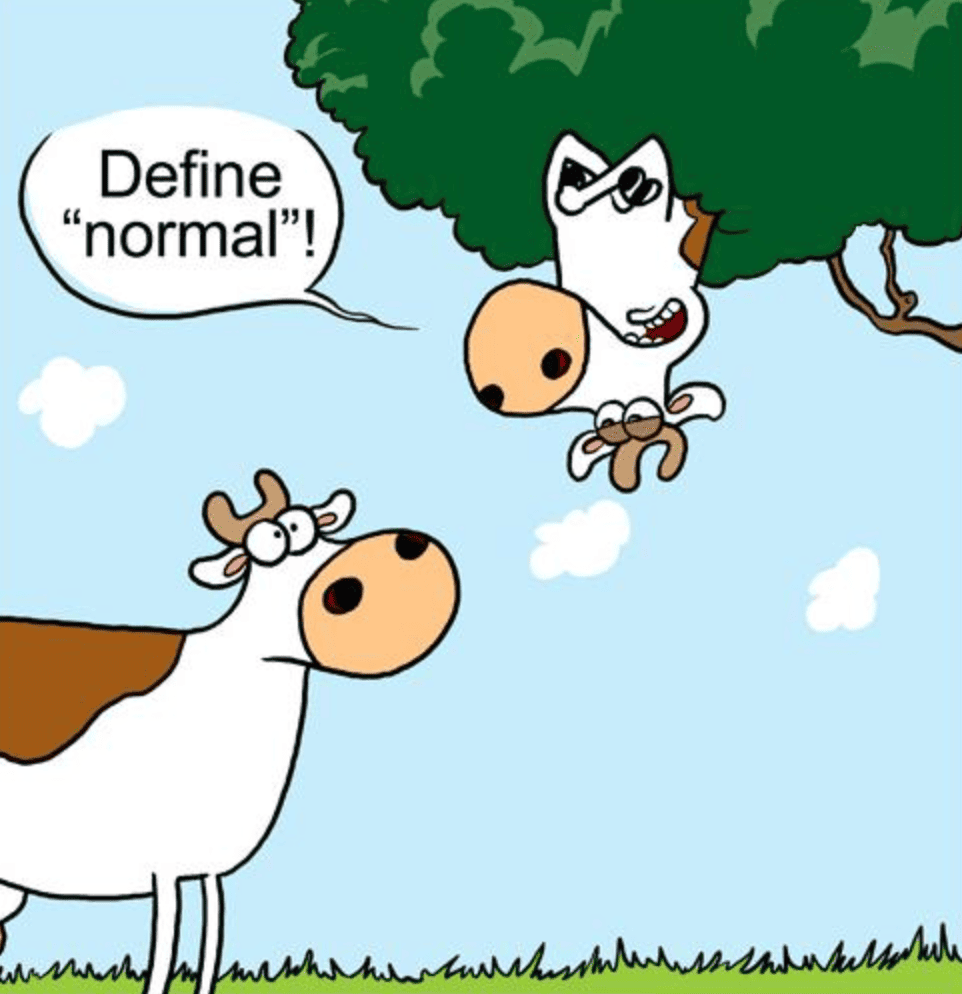
What is the Illusion of Normalcy?
- We look at everyone's life around us, through social media or everyday interaction, and we start believing that their life is normal and ours is the odd one.
- We have a lot of struggles, and no one else is facing this. This is the illusion of normalcy because we only see their best moments; we don't know their struggles.
- Our brain tries to fill these gaps and assumes that everything is normal.
- So, we say to ourselves, everyone else except me is happy. Why is my life not perfect?
- However, the truth is everyone has problems of their own.
**Disclaimer- This article is not for mental health diagnostic purposes; it explains how social media influences perception and self-comparison at a cognitive and neural level.
How Does the Brain Build the Illusion of Normalcy?
1. The Default Mode Network—Brain’s Pattern Factory
- The Default Mode Network (DMN) is the system active when you’re daydreaming, resting, or scrolling or during any task; it is constantly comparing, predicting, filling gaps and creating narratives.
- The DMN automatically stitches them into a story when you see social media posts. We start saying to ourselves, “She’s always happy,” “He always works out.” OR “They never fight.”
- Your brain is just trying to simplify what it sees, because normalcy becomes the default pattern.
2. Mirror Neurons Make You Internalize Social Media
When you watch others doing something, the mirror neuron system lights up. They try to convince you to copy those behaviors or patterns subconsciously. For example,
- You see someone confident → your brain copies the confidence
- You see someone successful → your brain persuades you to be the same
- You see someone “perfect” → your brain compares and tells you to do the same.
Social media shows many such examples of others; your mirror neuron believes these as normalcy. This in turn creates, pressure, self-criticism and unrealistic comparisons
3. The Dopamine Loop Makes Normalcy Addictive
When does normalcy turn dangerous? With every photo or visually pleasing reel, it gives you a tiny dopamine spike. It is tiny, but it is enough to create a cycle:
Cue Sent → Scroll → Reward → Repeat
Over repeated such loops, the brain links:
- Perfection → reward
- Aesthetics → reward
- Normalcy → reward
The more normal something looks, the more dopamine your brain expects from engaging with it. So your brain keeps wanting the illusion, because illusions simply feel good.
Brain Hates Missing Information:
- The brain does not like missing information, so it tries to fill up the gap, and this is called “cognitive closure.”
- Social media shows the happy side of it and not the bad sides. Therefore, your brain tricks you into believing their whole life must be perfect like that one snippet.
- This gap filling is the core to creating an illusion of normalcy.
Social Comparison Circuit Lights Up:
- Comparison with someone is not a flaw; it is evolution. The medial prefrontal cortex (mPFC) tries to evaluate where you stand, how you rank or whether you're safe socially.
- The mPFC, however, does not know the difference between just comparison and comparing with a threat. It just reacts as if you are far behind in the race.
- The mPFC threatens your sense of belonging, which your brain interprets as danger.
- So, in this case the illusion of normalcy acts like a threat detector and starts imagining and narrating as
- “Everyone is ahead. Why not me?”
- “Everyone is happy. Why am I like this?”
How Does Brain’s Negativity Filter Turn Normalcy Against You?
- The main task of the amygdala is to highlight the threats. When your brain sees the perfect or normal world around, it scans for flaws in your own.
- “I don’t look like that,” “My life is messy,” and “My routine is not good enough.”
- Now the amygdala triggers feelings of anxiety, self-doubt and dissatisfaction.
- It does not create these doubts as jealousy or angst for others, but because your survival brain is overreacting to curated images.
Breaking the Illusion of Normalcy:
- Always remind yourself that the social media algorithm rewards perfection and not the truth. You see everything that gets likes.
- Tell yourself that everyone has their own struggles. You are a human, and you are not in a race.
- Try to put a limit on doomscrolling. The normalcy illusion gets stronger with passive consumption.
Your awareness of the world can get even more powerful than the illusion of normalcy. Our brain is just constructing normalcy and not observing it. Not everything you see online is normal; it is everything that happens in the human mind behind the screen.
Is Social Media Really the Only Cause?
-
Social media does not create comparison, but it amplifies.
-
Long before digital platforms, humans compared themselves socially.
-
It is about algorithms that are intensifying the existing cognitive tendencies.
-
The effect is reduced by awareness but does not eliminate.
Click Here—To Read How Scientists Can Read Your Dreams. However, social media creates a waking version of the same illusion-building process seen in dreams.
Read more about brain and its creativity - Click Here