Myths, Media, and Viral Neuroscience
Myths, Media, and Viral Neuroscience
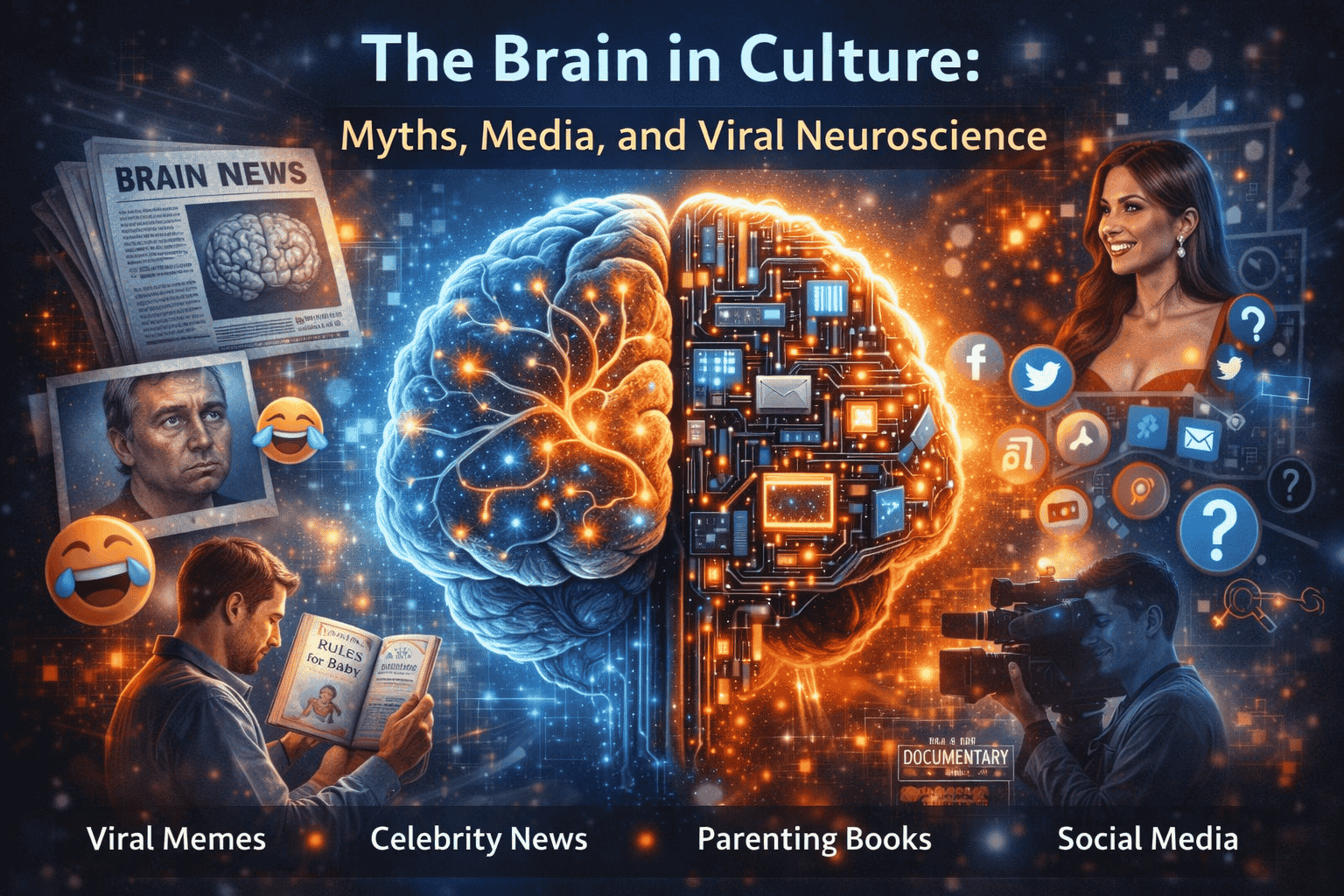
Neuroscience is not just limited to laboratories, journals, or classrooms, it is found in headlines, viral memes, documentaries, celebrity news, parenting books, and social media threads. For many people, their first exposure to the brain comes from culture and does not come from science
Stories travel faster, hence stories about the brain also travel faster. Some of them educate, some inspire, and some distort reality. Just a single headline or a viral image can shape how millions understand intelligence, disability, mental health, or neurological conditions.
This article explores how the brain is portrayed in culture and media. Why certain narratives go viral, and how neuroscience is often simplified or misunderstood when translated into public discourse.
Why Neuroscience Fascinates Culture?
The brain represents:
Vulnerability
Identity
Creativity
Emotion
Intelligence
Any viral news that involves the brain sparks curiosity. Narrative around neuroscience often gain traction because they touch deep questions:
How much control do we really have?
What makes us human?
What defines ability or disability?
The media plays a role in building the narrative and not simply reports neuroscience
Viral Neuroscience: When Complexity Goes Public
While neuroscience is complex, probabilistic, and nuanced, viral media thrives on:
Clear heroes and villains
Simplicity
Shock value
Emotion
This mismatch between real neuroscience and virality of the news creates tension. When neuroscience enters popular culture, it is often:
Emotionally amplified
Oversimplified
Decontextualized
Having a better understanding of this process helps separate scientific reality from narrative construction.
Brian Peppers: Neuroscience News
One of the starkest examples of the neuroscience viral news is the meme about Brian Peppers meme. It is an example of how neurological differences can be distorted by internet culture. It started off as image and quickly became a viral joke; it also detached from:
Human dignity
Medical context
Individual identity
This case, from a neuroscience and ethics perspective, highlights:
How neurological conditions are often misunderstood
How visual difference triggers bias
How anonymity enables dehumanization
One of the cases wherein the meme did not educate it flattened complexity into a joke.
Explore Further: Brian Peppers: The Truth Behind the Viral Meme
Alex Simpson’s Brain: Redefining Possibility
Rather than reinforcing the stories, in contrast, some stories challenge assumptions.
Alex Simpson is a story of a girl born with hydranencephaly, defying medical expectations through her lived experience. Her story is an example that says:
Ability must fit standardized models
Brain structure alone defines consciousness
Intelligence is always measurable
The narrative of Alex Simpson, forced both scientists and the public to confront uncomfortable questions about:
Quality of life
Neural plasticity
Consciousness
Read Further - Alex Simpson’s Brain: Girl Who Redefined Hydranencephaly
Celebrity Neuroscience: Attention Without Context
When the neurological topics involve celebrities, context often disappears but public interest skyrockets.
Kim Kardashian and Brain Aneurysm Searches
Surge in the search volumes around Kim Kardashian and brain aneurysms illustrates how celebrity-driven attention can:
Oversimplify medical reality
Increase awareness
Spread anxiety
Search trends do not reflect understanding, but they reflect curiosity. The sensational media headlines often blur the line between:
Speculation
Personal health stories
Medical facts
Without nuance, the result is viral neuroscience.
Click Here - Kim Kardashian Brain Aneurysm: The Most Googled Brain Topic
Parenting, the Brain, and Cultural Anxiety
Some topics like Brain Rules for Baby attempt to bridge neuroscience and parenting but cultural interpretation often turns guidance into:
Over-optimization of childhood
Rigid rules
Fear-driven decisions
Neuroscience aids in the forms of books and news can inform parenting, but culture often transforms it into:
Unrealistic expectations
Performance metrics
Developmental anxiety
Read More - Brain Rules for Baby: Science Meets Parenting
Myths That Culture Loves About the Brain
Some neuroscience myths do persist more because they are culturally appealing:
“Damage always means loss”
“We only use 10% of our brain”
“More brain activity equals higher intelligence”
“Left-brained vs right-brained personalities”
These myths also survive more than real truth because they offer:
Emotional comfort
Simple explanations
Clear categories
However, neuroscience shows the brain is adaptive, distributed, and context dependent.
Why Stories Matter More Than Facts
Facts give us information, but stories persuade. Cultural neuroscience spreads through:
Relatability
Narrative structure
Emotional resonance
A viral story about the brain often says more about societal values than scientific truth. What goes viral reveals:
Fear of difference
Fascination with extremes
Desire for meaning
Understanding brain narratives requires understanding culture itself.
Disability, Difference, and Representation
Neuroscience gains more reach through media and media representations influence:
Social inclusion
Public empathy
Self-identity
Policy decisions
It simply reduces neurological conditions to inspiration, tragedy, or spectacle erases lived complexity. Whereas, ethical storytelling respects:
Humanity
Context
Agency
The Role of Science Communicators
The bridge between laboratories and culture stand science communicators writers, educators, journalists, responsible neuroscience communication:
Centers human impact
Avoids sensationalism
Explains limitations
Embraces uncertainty
Creating a link between science and culture is not about simplifying truth it is about translating responsibly.
How to Read Brain Stories Critically
The next time when you encounter viral neuroscience stories, ask yourself:
What assumptions are being made?
What context is missing?
Are emotions driving interpretation?
Is this an individual case or general rule?
Frequently Asked Questions (FAQs)
Why do brain-related stories go viral so easily?
Virality is because they touch identity, intelligence, and fear core human concerns.
Is media neuroscience always inaccurate?
No, but it often simplifies or dramatizes complex science.
Can viral stories still raise awareness?
Yes. But awareness without context can mislead.
How should neuroscience be communicated to the public?
With accuracy, humility, and respect for complexity.
Cognitive Psychology: How Brain Thinks, Decides, Distorts Reality
Cognitive Development from Childhood to Adulthood
Clinical, Cognitive Disorders & Mental Health
Cognitive Behavioral Science & Therapy
Brain, Consciousness & Perception