Neuroscience of Dreaming: Why Your Mind Never Sleeps?
Do you also wake up from dreams feeling that you really experienced it? As if you had really lived through that dream and it is a part of your reality. This is best explained by the Neuroscience of Dreaming.
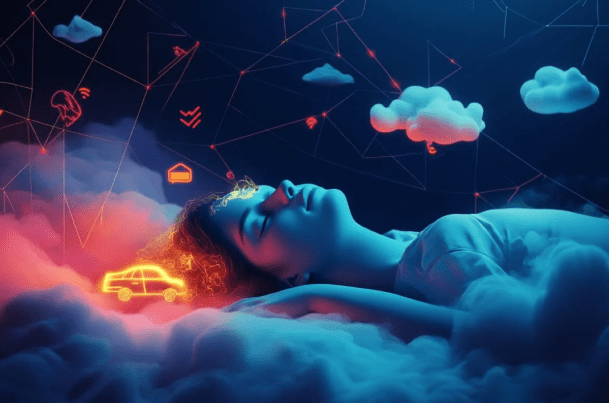
The neuroscience of dreaming says that dreams are not just some random scenes playing during sleep. Dreams are simulations created by your brain each night. The brain tries to blend emotion, memory, and imagination into a dream. The neuroscience of dream describes it as the mind’s private theater.
Every dream that you see is like a story produced and directed by your subconscious. The subconscious uses fragments of your experiences as props and emotions as lighting. In these dream scenes, your brain experiments with reality. It replays moments, testing possibilities, and sometimes revealing fears or desires you didn’t even know existed.
Though sometimes dreams might seem meaningless, the neuroscience of dreaming suggest that dreams serve vital functions: processing emotions, solving problems, and even rehearsing for real-life challenges. These dreams are a way where our brain tries to bridge the gap between the conscious and unconscious mind. This reminds us that our body may be at rest, but our brains never truly take a rest.
The Sleeping Brain: A Simulator in Action
During REM sleep (Rapid Eye Movement), when your body is still and your eyes hide beneath the lids, your brain becomes more active. Neuroscientists describe this REM sleep stage as the virtual reality mode. This is the time where the brain generates sensory-rich experiences using internal data rather than real-world input.
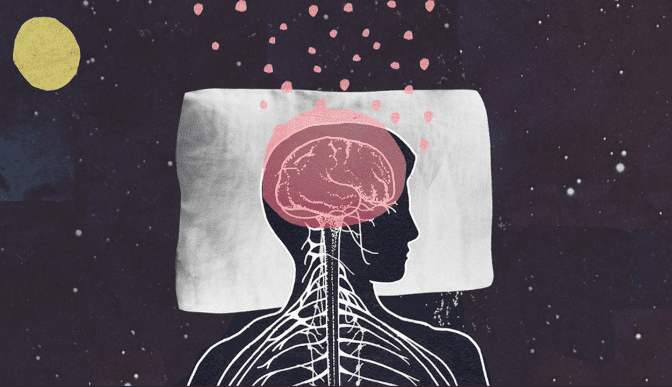
The visual cortex, amygdala, and hippocampus light up and help in creating sights, emotions, and memories.
The prefrontal cortex, which is the site for logical execution, takes a back seat. This explains why dreams often defy logic.
The result of this is a vivid dream, emotionally intense, and immersive world, built entirely from your own neural networks.
REM sleep is like a night shift for your consciousness, where your brain rehearses, repairs, and reimagines life in a safe simulated space.
For instance, if you had an intense anxiety-inducing day or you argued with someone during the day, your dream might try to reduce the emotional tension by replaying the argument with a different ending.
Memory consolidation: By allowing to learn and adapt, REM sleep strengthens connections between emotional and factual memories.
Future rehearsal: Especially during events like an exam, speech, or confrontation sometimes, dreams simulate these upcoming challenges.
Types and Patterns of Dreams: Neuroscience of Dreaming
Dreams vary in their content and tone, but they often follow certain patterns:
Lucid dreams: In these types of dreams, you become aware that you’re dreaming and you can even control it.
Recurrent dreams: You might have similar dreams many times repeating their theme, that may point to unresolved emotions or habits.
Nightmares: These emotionally intense and scary dreams are induced due to fear, stress or anxiety which activate the amygdala and stress pathways.
Problem-solving dreams: In these kinds of dreams our brain creatively explores unfinished thoughts or ideas.
Much interestingly, studies show that people across cultures frequently dream of falling, being chased, flying, or failing an exam. These types of dreams are universal, and all emotionally charged simulations tied to threat perception or control.
Why Some Remember Dreams and Others Don’t?
Some people recall them almost every morning and only 40–50% of adults rarely remember their dreams. This happens due to the timing of the dream and region of brain activated:
When people wake up during REM or shortly after, they tend to remember dreams more vividly.
In frequent dream recallers, the temporo-parietal junction is more active. A region linked to self-awareness.
If your brain transitions quickly from REM to deep sleep or wakefulness it does not store the “memory trace” leading to poor recall.
Therefore, this suggests, if you recall your dreams or not depends less on “whether you dream.” But it depends more on how your brain logs the experience before waking up.
Key Brain Regions Active During Dreaming:
Brain Region
Functions while Dreaming
Visual Cortex
The VC generates imagery and visual detail.
Amygdala
Amygdala adds emotional tone and intensity to the dream.
Hippocampus
The Hippocampus integrates memories and experiences.
Prefrontal Cortex
The PFC, usually less active, explains illogical plots.
Parietal Lobe
It helps with self-location and perspective shifts.
Default Mode Network (DMN)
The DMN combines memories, imagination, and creativity
The Dream as a Controlled Simulation:
Most recent research like Carr et al., NeuroImage, 2020 says that dreams can be influenced or guided using sensory cues during sleep.
The content of your dream is shaped by soft sounds, light flashes, or even mild tactile stimulation.
For example, if someone is really knocking at the door or calling you while you are asleep, a faint doorbell sound might appear in your dream.
This suggests that the dreaming brain isn’t completely shut down. It is listening and integrating sensory signals into your dreams.
Some neuroscientists are also trying to explore techniques like “dream engineering.” Making use of targeted cues to help people overcome trauma, boost creativity, or strengthen learning while asleep. Imagine practicing public speaking or facing fear, all within a single dream simulation. According to modern neuroscience concepts, dreams are increasingly considered a predictive simulation rather than random hallucinations.
The Architecture of REM Sleep:
REM sleep is not uniform; it has dynamic micro-states divided into two phases:
Phasic REM: Stage with bursts of rapid eye movement, vivid imagery, and emotional peaks.
Tonic REM: A stage which is calmer, there are narrative sequences with stable imagery.
This is the possible explanation why one moment you’re flying over mountains and the next you’re sitting quietly in a café. This is because your dreams likely shift between these modes.
There are up to 4-5 cycles of REM each night and each of them tries to refine the model of the external world. It is like your phone updating its software at night.
Creativity and Problem-Solving in Dreams:
The neuroscience of dreaming also says that "Dreams are the place of birth for creativity". The default mode network (DMN) is active during daydreaming and imagination. The DMN blends fragments of memory into novel combinations during REM. Artists have often reported solving creative problems after dreaming. Some of the famous examples are stated below:
The melody of “Yesterday” - Result of Paul McCartney’s dreams.
Dmitri Mendeleev could see the periodic table in his dreams.
Free from waking inhibition, the dreaming brain allows new associations to surface, making sleep a lab for insight.
Mind’s Hidden Classroom: Neuroscience of Dreaming
Subconsciously every night your brain runs countless virtual experiments. It tests emotions, rehearses interactions, reorganizes thoughts and invents new stories.
If you remember those dreams or not, these simulations are shaping who you are, refining your resilience, creativity, and self-understanding. The next time you drift into sleep, you're not merely resting. You are stepping into your own cognitive theater, where your brain quietly rewrites reality, scene by scene.