Insights Into the “Ferrari Brain”: Understanding Why Smart Minds Sometimes Struggle?
“You have a Ferrari brain” sounds like a compliment, and in many ways, it is. It is a boon because a Ferrari is powerful, faster, and built for performance. But imagine a Ferrari without brakes or without proper maintenance; even the best engine can stall if it’s driven on the wrong road.
The same paradox is applied for some children who think faster, feel deeper, and generate ideas at extraordinary speed. Their brains are curious, imaginative, and capable of complex reasoning far beyond their peers. Despite all of this, many of these individuals struggle with focus, emotional regulation, or everyday functioning.
It simply means a brain that is fast, powerful and built for performance. That does not sound like a problem, but the twist is even a Ferrari can stall if it’s stuck in traffic or driven on the wrong road. The same explanation goes for human minds. Let's try to understand what's happening inside this so-called Ferrari brain. Let’s open the mystery box and find out together.
What Is a “Ferrari Brain”?
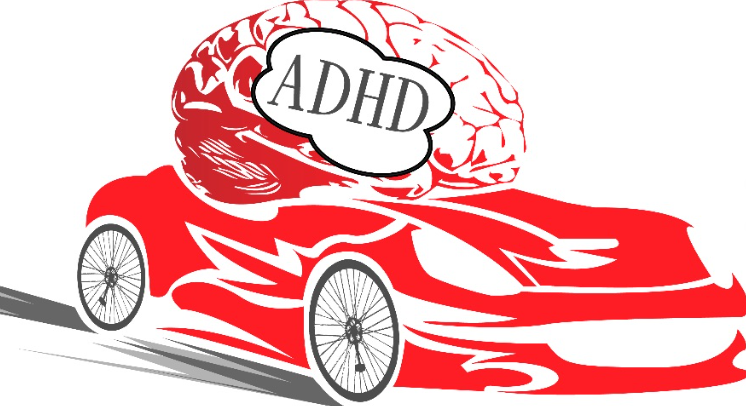
Let's imagine an example of a brain that runs like a Ferrari engine. It is fast, powerful, and built for performance. People with high intellectual potential or ADHD often have what experts call a Ferrari brain. In comparison to normal brains, they think faster, feel more deeply, and process information at lightning speed. But to reach its full potential like a Ferrari, this kind of brain needs the right driver, road, and maintenance.
What Is a “Ferrari Brain” in Neuropsychological Terms?
"Ferrari brain" is not just an informal term; from a neuropsychology perspective, a Ferrari brain refers to a high-capacity cognitive system with uneven neural development. Individuals with a Ferrari brain show:
- A high processing speed
- Advanced level of abstract reasoning
- Very strong divergent and associative thinking
- Emotional sensitivity that is heightened
- Novelty seeking and intense curiosity
The above-mentioned strengths, however, are frequently paired with vulnerabilities in executive control systems. This type of brain is usually seen in
- People diagnosed with ADHD
- Very highly creative thinkers
- Gifted individuals
- In some individuals who overlap on the autism–ADHD spectrum
The Core Neuropsychological Mismatch
The main problem that these individuals face is regulation and not intelligence. The two main systems developing at different speeds are:
- The idea-generation networks which are fast and expansive
- The executive-control networks which are slower and stabilizing
When there is such a speed mismatch and the idea generation network overtakes regulation, the result is
- A mental overload
- Difficulty in prioritizing
- More emotional reactivity
- Inconsistency in performance
These results explain why high-potential individuals may appear disorganized, inattentive, or underachieving.
Brain Networks Involved in the Ferrari Brain:
There are various structures of the brain involved in the process, which are responsible for the results.
-
Prefrontal Cortex (PFC):
The prefrontal cortex is the control center, and it governs:
- Emotional regulation
- Planning
- Attention
- Decision-making
- Inhibition
The PFC is developmentally asynchronous in many Ferrari brain cases and is capable of complex thought, yet less efficient at sustained control under stress. This asynchronicity is especially seen in ADHD and twice-exceptional individuals who are gifted and have learning differences.
-
Dopaminergic Motivation System
The dopamine levels regulate:
- Levels of motivation
- Task engagement levels
- Anticipation of reward
Ferrari brains often require higher stimulation to stay engaged due to the dopamine systems. These higher needs lead to:
- A hyperfocus on interesting tasks
- Low-stimulation tasks causing rapid disengagement
- A difficulty with delayed or routine rewards.
All of this does not suggest laziness, but it is neurochemical reality.
-
The Default Mode Network (DMN)
The DMN is highly active or more active during:
- A creative insight
- Thinking that is self-referential.
- Daydreaming
In individuals with Ferrari brains, the DMN can be overactive, interfering in tasks that need sustained external attention. This leads to:
- Difficult time staying “on task” despite effort
- A wandering mind
- Thoughts racing all the time
Emotional Intensity and the Limbic System
Individuals with Ferrari brains often experience emotions more intensely than normal people and this involves
- Emotional processing that is faster
- Amygdala reactivity is heightened
- For emotional events, stronger memory encoding
These emotions without sufficient regulatory control from the prefrontal cortex can:
- Intrude performance
- Get escalated quickly
- Reasoning is overwhelmed
One of the reasons why many high-potential individuals are also deeply empathetic and deeply affected.
The Genetics Behind the Ferrari Brain
Taking a simple example of an athlete like Usain Bolt, his legs are naturally made for speed, and this is because of his fast-twitch muscle fibers; similarly, some brains are genetically wired for high cognitive performance.
These Ferrari brains allow children to reason abstractly, talk more, sleep less, and remember more at an early age because they have an advanced prefrontal cortex development. There is more to it than their mental age being years ahead of their chronological age.
And the pitfall is that high performance is not always guaranteed with high potential.
These extraordinary brains also need the right environment, the emotional support and the right ways to channel their energies. That is, often these brains can stall or even self-destruct.
Why High Intelligence Does Not Protect Against Struggle
Even in our everyday lives for normal humans, one of the biggest myths is that intelligence compensates for regulation difficulties. Whereas neuropsychology shows the opposite of what we assume:
- Higher levels of intelligence can mask difficulties
- Over time, burnout becomes more likely
- The compensation increases cognitive load
In early life many Ferrari-brain individuals perform well until the demands exceed their regulatory capacity. This is the evidence of late diagnoses of ADHD or burnout in:
- Academically successful adults
- Creative leaders
- High-achieving professionals
Why the Ferrari Brain Can Struggle
1. The Wrong Road
This special kind of brain feels trapped in an unstimulating environment and eventually becomes bored and frustrated. Because the child is “revving in the driveway” with nowhere to go, this frustration often shows up as defiance, inattention, or disruptive behavior.
2. Social Speed Limits
These children, and especially girls, try to hide their intelligence to fit in with other children. They start sacrificing achievement for their belonging; this “forced-choice dilemma” means they downshift their speed to fit in with the group.
3. The Double-Clutch of ADHD
Some of these hyperactive brains also come up with both an accelerator and a brake. Their brains constantly race with ideas and creativity, but control and focus lag behind.
These gifted traits can remain hidden and underused when their attention struggles overshadow their ability.
The ADHD–Ferrari Brain Connection
One of the clinical examples of a Ferrari brain is people diagnosed with ADHD. The neuropsychological findings in ADHD include
- A reduced activity in frontal–striatal circuits
- Altered levels of dopamine transmission
- Delay in maturation of executive control networks
All of the following results in:
- Very high creativity and lots of idea generation
- Challenges with time perception and impulse control
- Difficult to sustain attention on non-rewarding tasks
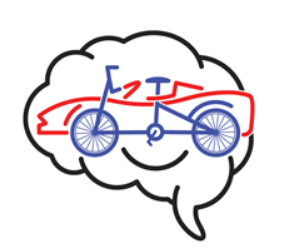
Hence, there is a widely used analogy that says, “A Ferrari engine with bicycle brakes.” The engine works very beautifully, but the braking system needs regulation.
Reframing the Ferrari Brain Through Neuropsychology
Ferrari brains are high-output neural systems with specific calibration needs and are not. In cases when misunderstood, individuals usually:
- Accumulate shame
- They underperform compared to their potential
- Internalize failures
When supported, these individuals innovate, create, and lead.
How Can You Help a Ferrari Brain?
To help, there are three key ingredients that are essential to help these gifted minds shift from potential to performance:
- Right Road—Try to provide stimulation and intellectual challenges that match with their ability level and keep them engaged.
- Right Traffic – Try to always surround them with individuals who inspire and understand them.
- Right Navigator—Most important is that they need teachers, parents, and mentors who recognize their unique brains and guide them wisely.
ADHD individuals stop “revving in the driveway” and start racing down the superhighway of achievement when these conditions align.
Key Takeaway
In short, the Ferrari Brains are not a burden; they are like a beautiful, high-performance machine that needs skilled handling. The only fact is that we need to recognize its unique design, manage its sensitivities, and fine-tune its focus. The results can be breathtaking.
Scientific Context
Cognitive performance always comes from the interaction of attention networks, executive control, emotional regulation systems, and motivation and not raw intelligence alone, as suggested by neuropsychological research.
It is really good