Brain Rules for Babies: What Neuroscience Says About Early Brain Development
In the year 2025, over the last few months, searches for “Brain Rules for Baby” have surged. Most new parents and psychologists are reconsidering an important question: “How does early brain development play a role in shaping emotional intelligence, attention, and resilience for life?”
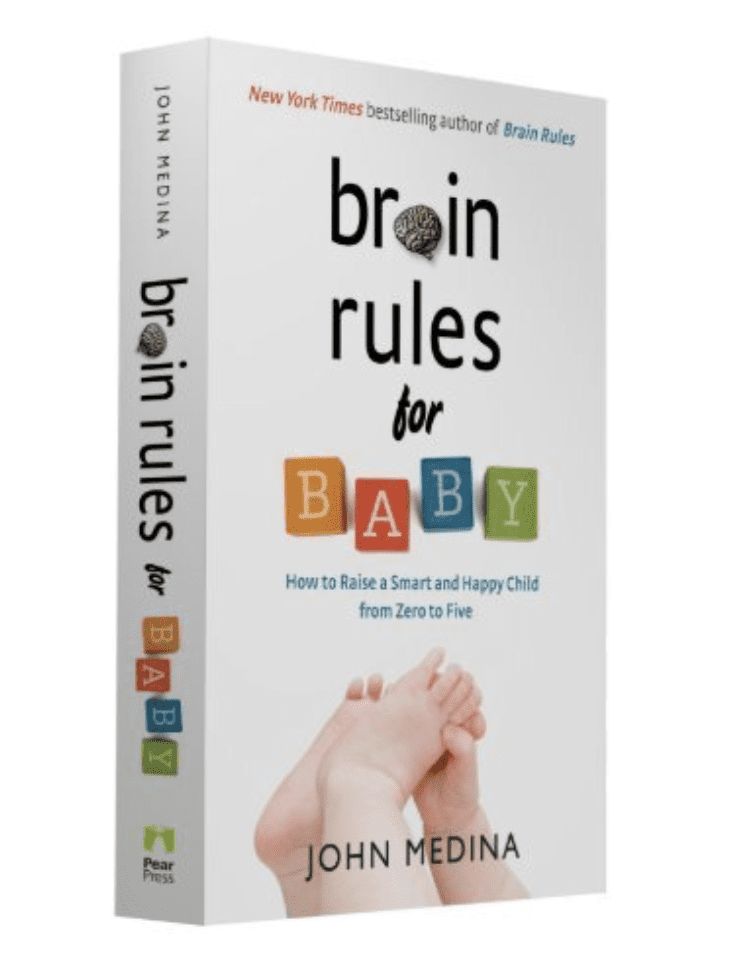
Brain Rules for Baby is a book written by neuroscientist Dr. John Medina; it gained more attention in 2025 because its ideas align closely with what modern neuroscience says: the early years of life are foundational and are not just important.
The article below explains what actually happens in a baby’s brain. Why do early experiences in life matter so deeply, and how do everyday parenting behaviors influence lifelong mental health and learning?
Why Early Brain Development Matters
A baby’s brain is not completely developed at birth; it continues to develop throughout life. An infant’s brain is only about 25% of its adult size, yet it contains nearly all the neurons it will ever have. What are the changes that happen rapidly?
- The number of synaptic connections
- Efficiency of the neural networks
- Development of emotional regulation systems
The brain forms more than one million new neural connections per second between pregnancy and age five. The experiences during this period of life determine how these networks are strengthened or pruned.
How Pregnancy Shapes the Baby’s Brain Before Birth:
Brain Rules for Baby has many evolutionary concepts of development, but one of the most striking and emphasized insights is that learning begins before birth. The fetal brain responds to the following:
- Oxygen and nutrition supply
- Patterns of sleep
- The mothers' stress hormones
- Maternal emotional state
Role of Stress and the Developing Brain
During pregnancy, chronic stress increases levels of cortisol. The levels of cortisol can play a role in the fetus’s stress-response system. Research studies show this may affect:
- Reactivity towards emotion
- Regulation of attention
- A vulnerability to anxiety later in life
Occasional stress is not harmful, and this means that rather, persistent, unmanaged stress is the concern.
Nutrition and neurogenesis
Levels of nutrients influence neurogenesis in an infant; the key nutrients are omega-3 fatty acids, iron and folate. These nutrients support neurogenesis, which means the formation of new neurons, and myelination, meaning insulation of neural pathways. Therefore, this suggests that a supportive pregnancy environment lays the groundwork for postnatal learning and emotional security.
Why Screens Under Age Two Are Linked to Developmental Delays
Another important and highly discussed idea from the book is regarding concerns about screen exposure in infancy. Thus, the idea of screen exposure is strongly supported by developmental research. And what are the skills that babies do not learn through screens?
- Face-to-face interaction
- Emotional feedback
- Vocal Tone
- The eye contact
Screens don’t respond to a baby’s expressions or cues in real time and lack contingent response. Research shows that under the age of two, screen exposure has been linked to:
- A delayed language development
- Lesser attention spans
- A weaker social engagement
One of the reasons why pediatric guidelines emphasize human interaction over digital stimulation during early development.
Emotional Regulation Comes Before Intelligence:
One of the central ideas of Brain Rules for Baby that is often misunderstood is that “emotional safety precedes cognitive performance.”
The neuroscience of the notion of cognitive performance before emotional safety is
- The PFC manages impulse control, attention, and reasoning
- The amygdala is responsible for processing emotional threats.
- Chronic levels of stress suppresses prefrontal activity
For children who feel emotionally secure, they regulate emotions better, learn more efficiently and show greater curiosity. This is the reason why responding calmly to a toddler’s meltdown is not “spoiling”; it is teaching emotional regulation.
The Parenting Book That Broke the Internet
Searches for Brain Rules for Baby have exploded, over the last few months. How early brain development shapes lifelong emotional intelligence and focus? Is one of the questions of prime importance to new age parents, teachers, and psychology enthusiasts are rediscovering answers to this question.
Why is this book a hot topic for discussion all of a sudden in 2025? It is because the ideas mentioned in the book connect science, storytelling, and emotion. The reason behind it is simple: there are three things that deeply influence the modern human brain. and is
The book also primarily focuses on the following questions:
- What’s the single most important thing you can do during pregnancy?
- How should you respond when your toddler has a meltdown?
- And does watching TV actually harm a baby’s brain?
These questions are answered by neuroscientist Dr. John Medina in his bestselling book Brain Rules for Baby.
The book uncovers how a child’s brain truly develops, backed by research in developmental biology and psychology — from day one, how parents can nurture both emotional well-being and intelligence.
1. Before Birth — How Parents’ Choices Shape a Baby’s Brain?
The first and foremost rule by Medina: Even before birth the brain starts learning.
A baby's neural development is influenced by everything that a mother experiences including stress levels, nutrition, and sleep.
- The fetus’s stress-response system can be affected by chronic stress in pregnancy which raises cortisol levels.
- Neurogenesis that is creation of new brain cells starts with both a healthy diet and exercise boost oxygen flow.
- The foundation for learning after birth most importantly occurs due to a calm and emotionally secure environment.
“What you do right now — before pregnancy and through the first five years — affects your child for life.” – Dr. John Medina
2. Why Are TV and Screens Under Two More Harm Than Good?
One of the most interesting and highly discussed findings mentioned in the Medina's book: For children under two, TVs and screens are harmful.
Human interaction is a way for young brains to learn through and not screens.
The core ingredients of cognitive growth are eye contact, voice feedback, or emotional connection which are offered by face and not a screen.
Delayed language skills and attention problems later in school are linked to too much screen time during infancy suggested by research.
Unlike digital stimulation which has nothing to offer, Medina's book Brain Rules for Baby. urges parents to focus on singing, talking, and reading to their children every day.
The best way to get your child into good behaviour? Teach impulse control
4. Play Is the Brain’s Most Powerful Teacher
Children practice real-world skills in a safe setting by playing and absorbing from game like peek-a-boo to pretend games.
The prefrontal cortex lights up while playing, which in later years is used for decision-making and creativity.
Without lectures or pressure, play teaches risk assessment, cooperation, and problem-solving.
Children who engage in free play develop stronger emotional and social intelligence than those in structured “achievement” settings and it’s no coincidence.
5. Nature vs Nurture — The Balance of Genes and Parenting
The myth that either genes or environment alone determine a child’s fate is debunked by Medina's book.
Supportive parenting can reduce how that gene expresses itself for instance if a child inherits a predisposition for anxiety, supportive parenting helps.
Conversely, stress-related traits are amplified by a chaotic environment.
Takeaway: Parents can dramatically change how those genes behave and not change genes.
7. Happy Parents Raise Resilient Kids
First and most important is that parents must care for their own emotional health which has been highlighted by the book.
Through tone, gesture, and facial expression, children pick up on parental moods.
Children with stronger stress responses and empathy are raised by couples who manage conflict calmly and share household duties.
In simple words: Your child’s first classroom in emotional intelligence is your relationship with your partner.
The Real Rule of the Brain: Connection Before Correction
Brain Rules for Baby redefines what it means to “raise a smart child.”
Through emotional security and playful learning runs the path to intellectual achievement.
So, turn off the TV, tell a story, and laugh together!
Every word you speak and every hug you share literally wires your child’s brain for life.
Scientific Note:
The first five years of life represent the most sensitive period for brain architecture formation, as suggested by the Harvard Center on the Developing Child.
**Disclaimer: This article does not replace professional parenting or medical guidance and is for educational purposes only.
Smart and happy aren’t opposites — they’re twins.
“According to the Harvard Center on the Developing Child, the first five years are the brain’s most sensitive learning window.”
Kim Kardashian Brain Aneurysm — The Most Googled Brain Topic