Do you also tell yourself you will just check your phone for a minute? Before you realize, it is ten minutes and that turns into an hour, and you still find yourself scrolling? Meanwhile you lie on your bed, in the dark with your eyes strained and your thumb scrolling. But have you ever wondered why you can’t seem to stop scrolling? In fact, why does that tiny ping notification badge hold more power than a good night's sleep?
From a funny meme you’ve jumped to a recipe video and somehow ended up just watching without really remembering anything that you watched. It sounds familiar right? This is the truth about everyone nowadays and not just you and this is because social media is built to keep you engaged or hooked up. It feels like a harmless habit.
Let's read more about it, where we will together break down the simple neuroscience behind why social media feels so addictive.
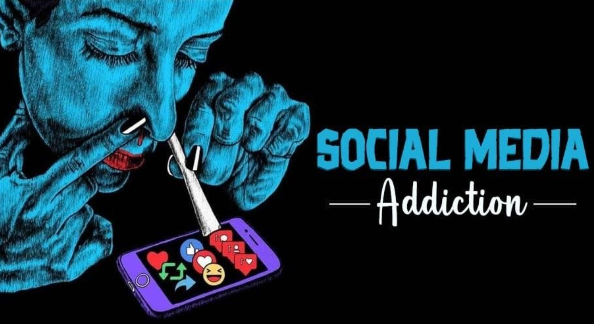
Overview
- Learn how your brain reacts to social media.
- See how platforms keep you hooked on purpose.
- Understand the effects on your mind and daily life.
- Find real ways to take back control.
Social Media and the Brain’s Reward Architecture
Dopamine as a Learning Signal, Not Pleasure
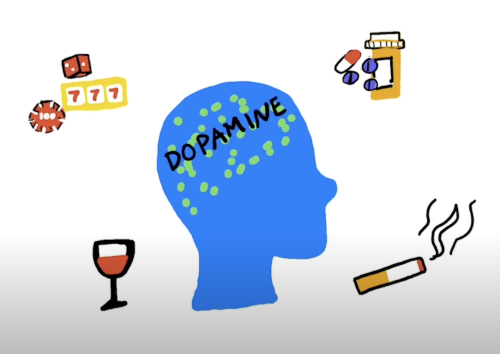
According to neuropsychology dopamine is not simply a “feel-good chemical”, it is a learning signal, its primary role is reinforcement learning.
What does Dopamine signal:
- Motivational importance
- When something unexpected happened - Prediction Error
- Novelty
In case of social media users, when a person receives a like, comment, or notification, the dopamine activity increases. It increases not because the reward is meaningful, but because it is unpredictable and socially relevant.
Over a period of time, the brain tells the user that: Repetitively checking the app may lead to rewards. The urge to check again creates a learning signal that strengthens approach behavior.
Variable Reinforcement and Compulsive Checking
One of the well-established principles in behavioral neuroscience is variable ratio reinforcement, it is the most powerful driver of compulsive behavior.
While one uses social media sometimes:
- A post gets attention
- A post does not
- Unexpected content appears
This unpredictability keeps the brain in a state of anticipation and activates dopamine systems more strongly than consistent rewards. In other words, even when the reward is minimal, anticipation itself becomes reinforcing.
Habit Formation and Automaticity
Repeated behaviors link cues to actions and are encoded through cortico-striatal circuits. Each and every cycle from boredom to stimulation, strengthens neural pathways that allow the behavior to occur without conscious intention.
- Boredom → Phone → Scroll → Stimulation
Eventually, over a period of time scrolling becomes reflexive, context-triggered and decoupled from deliberate choice. This is the explanation for why many users start scrolling without remembering why they picked up their phone.
Executive Control and the Prefrontal Cortex
The prefrontal cortex (PFC) plays a major role in impulse control, long-term planning and resisting immediate rewards. And social media challenges executive control in two ways:
- High-frequency stimulation - Constantly seeking for new content exhausts the brain's ability to stay in control.
- Emotionally salient rewards - The limbic systems get activated due to social validation and this can override rational decision-making.
Both these factors cause an overall reduced prefrontal engagement during compulsive digital use, which is similar to patterns seen in other behavioral addictions.
Attention Networks and Cognitive Fragmentation
If the PFC control is hampered, attention levels are affected. Attention levels are not unlimited, and they rely on coordinated activity between:
- For goal-directed focus, dorsal attention networks are responsible.
- Stimulus-driven attention is handled by the ventral attention networks.
Constant use of social media strongly activates stimulus-driven attention. This causes the brain’s focus to be redirected towards new information. Over a period of time this can eventually:
- Decrease tolerance for sustained attention
- Impair the working memory
- Heighten distractibility
All of this does not mean permanent damage to attention, but it does condition toward rapid switching.
Social Cognition, Comparison, and Emotional Load
Human beings are social animals, and social media constantly stimulates social-evaluation networks, including regions that are involved in:
- Self-referential processing - Relating the information to yourself
- Social comparison - Comparison to others in all ways.
- Emotional salience - How rewards trigger an emotional response.
And a repeated exposure to perfect images of others can:
- Increase symptoms of anxiety and depressive
- Activate stress responses
- Distort self-perception - Feeling worthless about yourself
There is an increased emotional reactivity because the brain interprets perceived social exclusion or inferiority as a threat signal.
Fear of Missing Out as a Stress Response
FOMO is not just a social media term; it has a deeply neurological meaning. The brain evolved to monitor social belonging via the threat-detection systems. All the missing information that other have access can trigger:
- Increased Vigilance - Always having the need to keep watching
- Anxiety-driven Checking - Checking constantly due to anxiety
- Compulsive Refreshing - Feeling an urge to keep refreshing mindlessly
This causes a stress-driven engagement, increases emotional exhaustion and strengthens the scrolling habit.
Algorithmic Personalization and Reinforcement Loops
In today's world, all the applications on our phones use algorithms to make the experience more personalized. They adapt to the user's behavior in real time, and this creates:
- Highly individualized rewards - Rewards customized for each user.
- Emotional Reinforcement Loops - Cycles that keep pulling you back and emotionally invested.
- Reduced signals that tell you when to stop.
The human brain adapts itself to this customized experience, making disengagement extremely difficult.
Is Social Media Addiction Comparable to Substance Addiction?
Yes, there are some important factors that overlap and studies show that:
- There is an activation of similar reward circuits
- The impulse control networks are affected
- Craving type of states can emerge
The difference is not in brain systems, but the real difference is in dose and delivery.
Social media does not provide high-intensity chemicals; instead, it sends frequent, low-intensity rewards.
Developmental Considerations: Adolescents and Young Brains
How social media affects adults and adolescents is very different. In the case of adolescent brains, they are still developing executive control networks, and this makes them:
- Their brains are more sensitive to reward
- Are less efficient at impulse regulation
- And more vulnerable to social evaluation
During this stage, excessive social media use can:
- Long term changes in attention habits
- Interfere with sleep
- Emotional volatility is increased
During these developmental windows, creating boundaries or being within limits is very important.
Neuroplasticity: Why Change Is Possible
There is no age limit for learning, and the brain remains modifiable throughout life. If compulsive social media use is reduced, it allows:
- The dopamine signaling to normalize
- The executive control is strengthened
- Rebalance achieved in attention networks
And one of the foundational principles of neuroplasticity is that neural pathways weaken when behaviors are no longer reinforced.
Evidence-Based Neuropsychological Strategies
Reduce Importance By:
- Turning off unnecessary notifications
- Removing all the visual hints or cues that trigger checking
Increase Cognitive Effort By:
- Logging out after every use
- Intentionally delaying the access
Restore Executive Control By:
- Scheduling the usage timings
- Protecting sleep and deep-focus timings
Replace Reward Systems By:
- Regular physical activity
- By increasing real time social interaction
- Reading
Social Media Is Not Inherently Harmful
All of these studies do not suggest complete elimination of technology because if used wisely technology can support social connection, enhance learning and foster creativity. The most important factor is to control whether behavior is intentional or compulsive.
Effects of Social Media Addiction on You
Impact On Your Mind
- It increases your anxiety and depression
- It leads to low self-esteem due to constant comparison.
Impaired Focus
- Short form content shortens your attention span.
- This makes it harder to stay focused on work or school.
- Your concentration is broken by every notification.
Changes In the Society
- For views and engagement, it also encourages fake news.
- It also creates unrealistic success and beauty standards.
- People don't need each other and it weakens real human connections.
How to Break Free from Social Media Addiction?
1. Set Time Limits
- Set screen-time tools on social media apps.
- Divide the specific time limits for all the apps.
2. Turn Off Notifications
- Turning off notifications for unwanted apps will stop the constant dopamine triggers.
- Try to check for updates when you want and not when your phone tells you to.
3. No-Phone Zones
- Minimizing screen time by keeping your phone away from the dining table and bedroom.
- Set proper offline times for mornings and nights.
4. Replace the Habit
- Engage yourself by reading, walking, drawing, or talking to a friend instead of scrolling.
- Fill that leisure time with real experiences.
5. Go on a Digital Detox
- Cut off social media for 24 hours.
- Keep a check on yourself when you feel the urge to check and write it down.
- Look for patterns that trigger your scrolling habit.
Taking Back Control
- Change is definitely possible because our brains can adapt and rewire.
- Remember our goal is not to quit social media completely.
- Our main goal is to use it mindfully, not mindlessly.
- The capability to bring changes in your routine is in your hands without the phone.
Bright Side of Social Media
There are many advantages of social media if we can use it wisely:
- It helps stay connected even with distant friends and family.
- It gives easy access to information and improves multitasking.
- Shows the other side of a story, different opinions and exposes you to new ideas.
The only bad factor is when your scrolling habit turns into compulsion!!
Social media is just engineered to keep you engaged but it's not evil. Social media knows how to deliver content such that your brain is wired to seek reward. The best part is you can still take back control by starting small, setting limits and turning off the noise.
Learn more about Ferrari-style brains and cognitive optimization.
Understand how early brain development shapes intelligence.