Cotard's Delusion: The Walking Dead Syndrome Explained
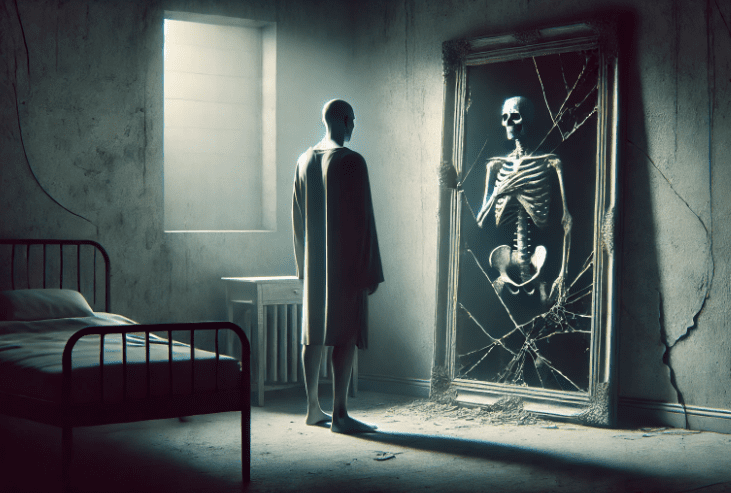
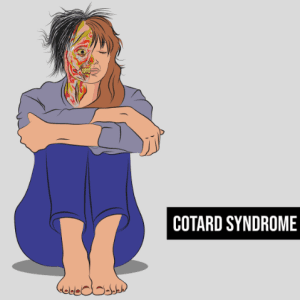
Have you heard strange stories of this rare disorder, where people believe they are dead or no longer exist? This rare brain disorder is Cotard’s Delusion, often called “Walking Dead Syndrome.” It is one of the most unique and one of the most unusual conditions in neuroscience.
Neuroscientific evidence also reveals that it comes from specific breakdowns in the brain’s emotional, perceptual, and belief-forming circuits. A person affected due to one of these reasons does not “imagine” the feeling, but their brain is genuinely misprocessing information.
People diagnosed with Walking Dead Syndrome, truly believe they are dead, empty inside, or that their body has stopped functioning. Although it is one of the extremely rare conditions, it reveals how deeply the brain controls our sense of life, identity, and reality. In this article we will find out why this disease makes people believe that they are dead.
Cotard’s Delusion: “A rare brain disorder where people believe they are dead or no longer exist”
Imagine your brain is the busiest and buzzing city. There are lights everywhere, the streets are alive, and every building has a purpose.
Now suddenly imagine that parts of this city suddenly go dark. The streets are no more colorful, no sounds and there are no buildings visible around. This is what happens with someone diagnosed with ‘Walking Dead Syndrome.’
In this rare brain disorder, a few key “neighborhoods” of the brain lose connection with each other:
The emotional center - like someone turned down the volume of life.
The identity network, - like there are no lights in the city you can't see anything or even yourself, everything becomes foggy.
The logical brain - no one around in the region that normally steps in and says, “Wait, this can’t be true.”
What Is Cotard’s Delusion?
Cotard’s Delusion or more commonly known as Walking Dead Syndrome is a rare neuropsychiatric disorder where an individual develops a fixed, false belief that they are:
Dead
Their organs are missing,
They are spiritually no more
Or they are not real.
They often tend to avoid people, talk less, or stop eating because they believe their body no longer needs food, because it is dead.
“How brain networks create the false belief of being dead?”
**Medical Disclaimer: This article does not substitute professional medical advice, diagnosis, or treatment and is for educational purposes only. Seek help from a qualified mental health professional, if you or someone you know experiences severe psychological symptoms.
Why Is Cotard’s Delusion Caused?
There are several reasons to this mentioned as follows:
Severe Depression
Extreme Stress or Trauma
Neurological Diseases like Epilepsy, Stroke, Dementia etc.
Frontal-Lobe Dysfunction
Medication or Substance Use
Disconnection between Emotion and Recognition as seen in Capgras syndrome
The Neuroscience Behind - Walking Dead Syndrome
Neuroscientists believe that Walking Dead Syndrome usually happens when two important brain systems malfunctions:
1. Limbic System (Emotional Processing System)
The Limbic system, especially the amygdala and insula help us feel emotions and evaluate them. The person may stop feeling happiness, sadness, or connection to others, when it becomes underactive.
This creates an emotional “numbness” which makes the brain think, “If I feel nothing… maybe I am dead.”
2. Frontal Lobes (Reality-Checking System)
The frontal lobes of our brain help us in judging what is real and what needs more thought.
And if the frontal regions are impaired, the person fails to correct the false belief, even when evidence shows they are alive.
This combination of lack of emotional response and poor reality check ultimately leads to the powerful illusion of being dead.
The Emotional Brain “Goes Offline”
The emotional reactions are created by the limbic system. In people with Cotard’s Delusion, this system becomes underactive.
What causes this Offline State?
Emotions are absent or feel flat.
Surroundings feel distant or “empty”
The person cannot feel excitement, pleasure, or even fear.
Scientifically, this feeling is also called emotional blunting or hypoactivity.
Brain’s Identity Network Breaks Down:
Generally, our sense of “self”, of being alive, present, real, is created by a group of regions called the default mode network (DMN).
In people with walking dead syndrome, the DMN shows abnormal connectivity and reduced activity.
Which Means?
Their brains cannot properly sustain the feeling of “I exist.” This in turn creates:
A detachment from the body
Distorted sense of identity
Complete disconnection from reality
In Simple Terms:
Cotard’s Delusion happens when three things occur together:
Emotion system shuts down → Creates a feeling of being dead.
Identity network weakens → Impaired sense of self.
Frontal lobes fail to correct → Delusions are formed, with no reality check.
Results of Impaired Function in Brain:
The brain has no ability to correct the false perception of being dead. It starts accepting this delusion because:
Lack of emotions.
The sensory feedback is wrong.
The identity network is weak
The logical brain circuits cannot fix the mistake anymore.
The combination of these delusions becomes strong and unshakeable.
Disrupted Body Perception Circuits:
In Walking Dead Syndrome, the brain may misread body signals as:
“My heart is no more beating”
“I cannot feel hunger”
“I don't feel my body or my organs”
This strengthens the perception: “If I can’t feel my body, maybe my body isn’t alive.”
The person may lose the basic feeling of being alive not because reality changed, but because the brain’s interpretation system has malfunctioned. This proves that our sense of “being alive” is not just biological but merely a fragile brain-generated experience.